Arran Geopark Artist Residency | June 2026
This residency was part of the ‘Scotlands Creative Cities Living Heritage Micro-Residency programme’ between Unesco sites; Perth city of craft and Arran Geopark.
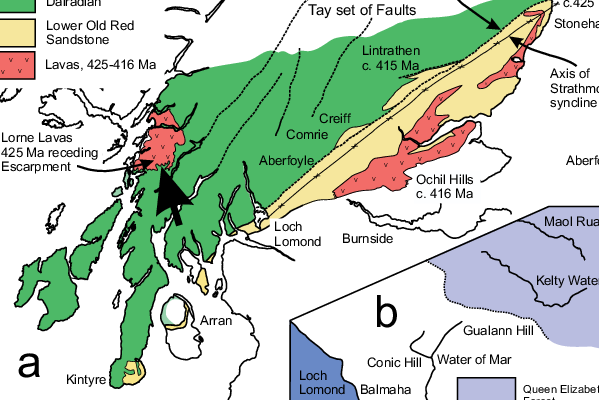
Living in Comrie Perthshire, I have been aware of our position on the highland boundary fault line, where we experience the odd mild earthquake from time to time as a result. The fault line cuts diagonally across Scotland, from Arran to Stonehaven, travelling through Comrie (see map below).
With an interest in geology, a few years back I carried out a short project with Strathearn Arts in Crieff, using the unique geology of the area to lead a series of workshops with a local group of participants. I loved this exploration and had wanted to take the study of geology further at the time. With a site-specific interest within my practise also, I had been looking for a new location to set a project. So when this Unesco residency opened up for applications, I was drawn right into the idea and developed a proposal. To be awarded the residency was a very exciting moment, I was so ready to take this on and felt great anticipation in visiting Arran for the first time.
Research and Process
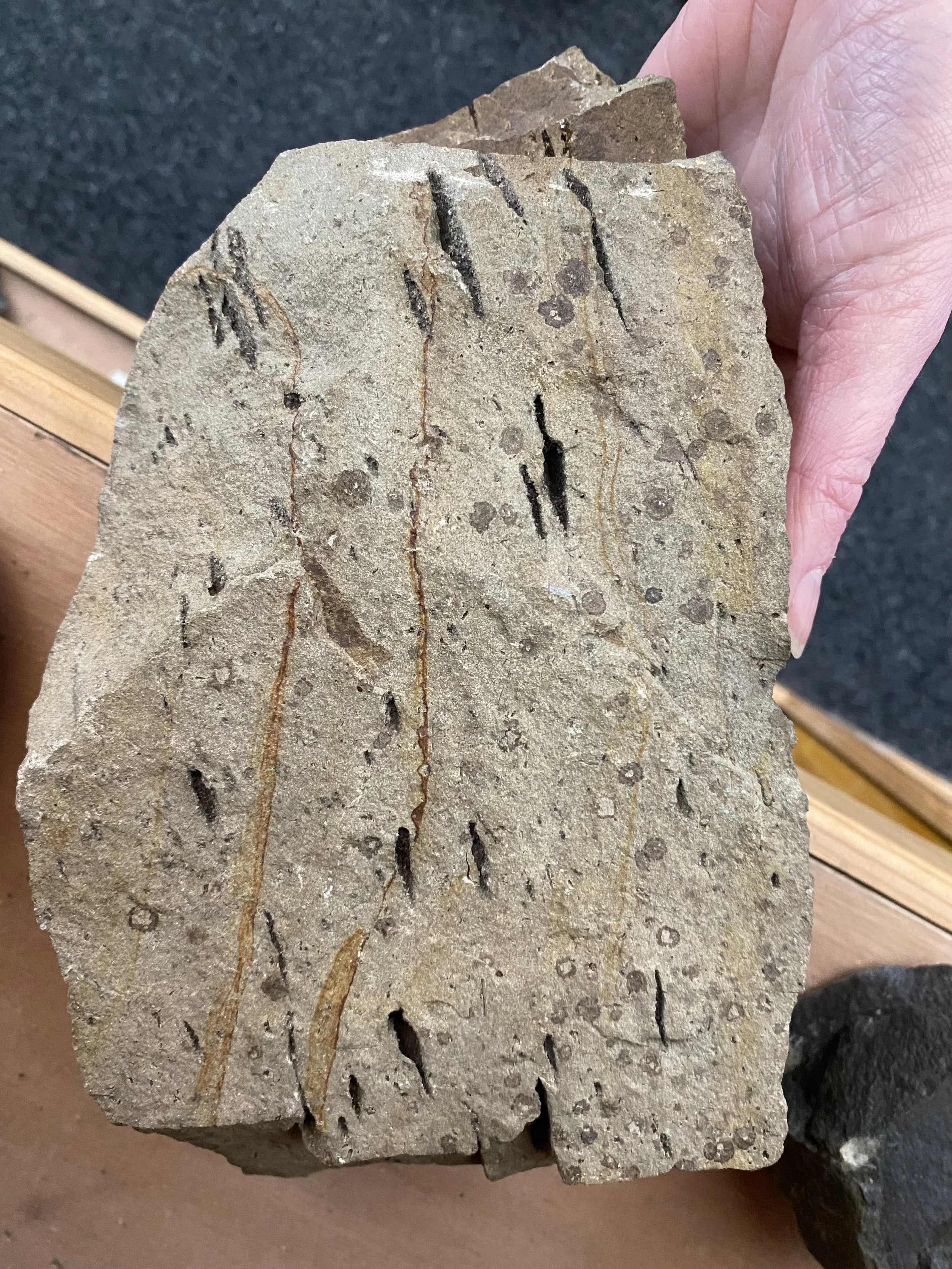
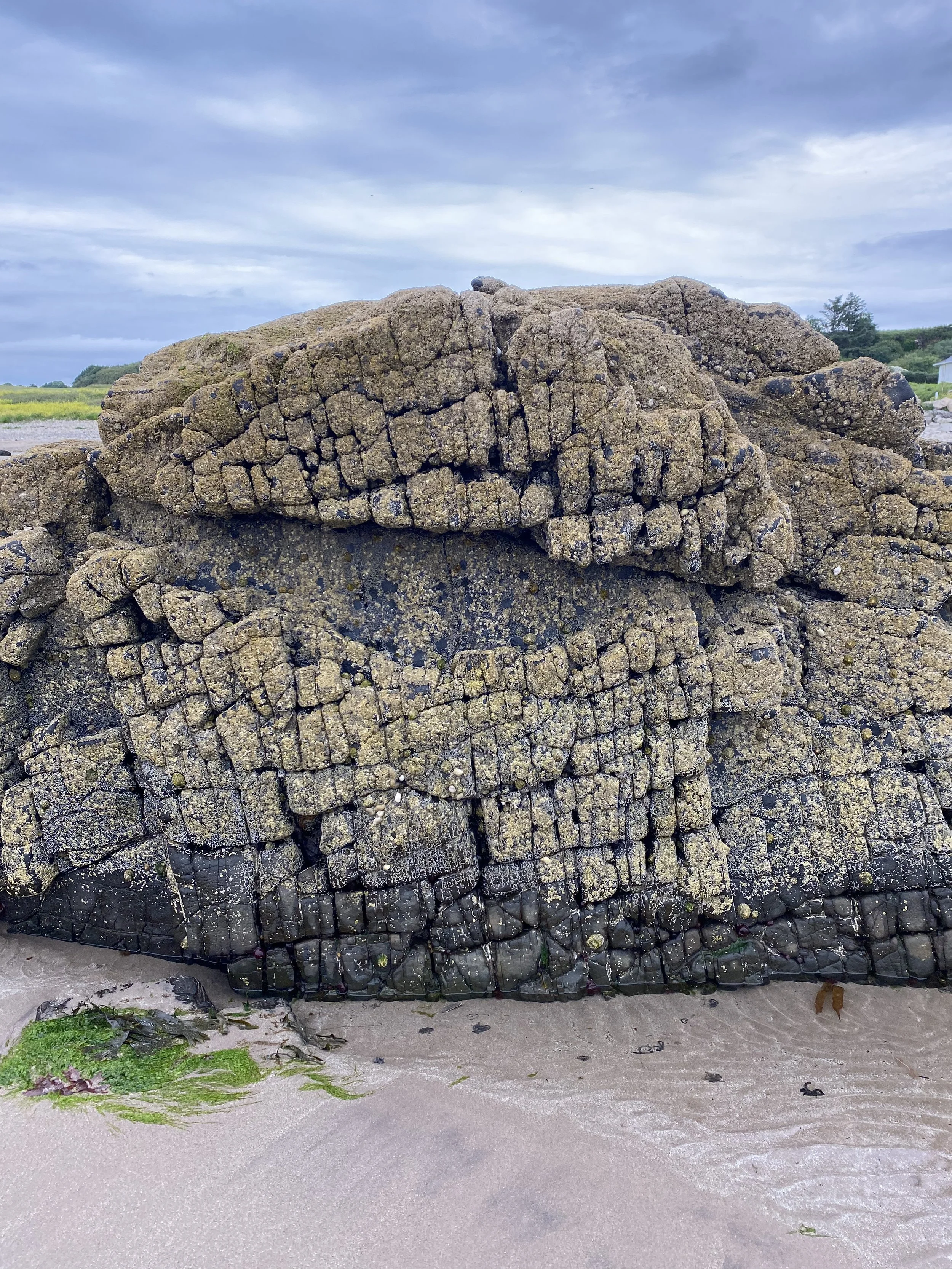
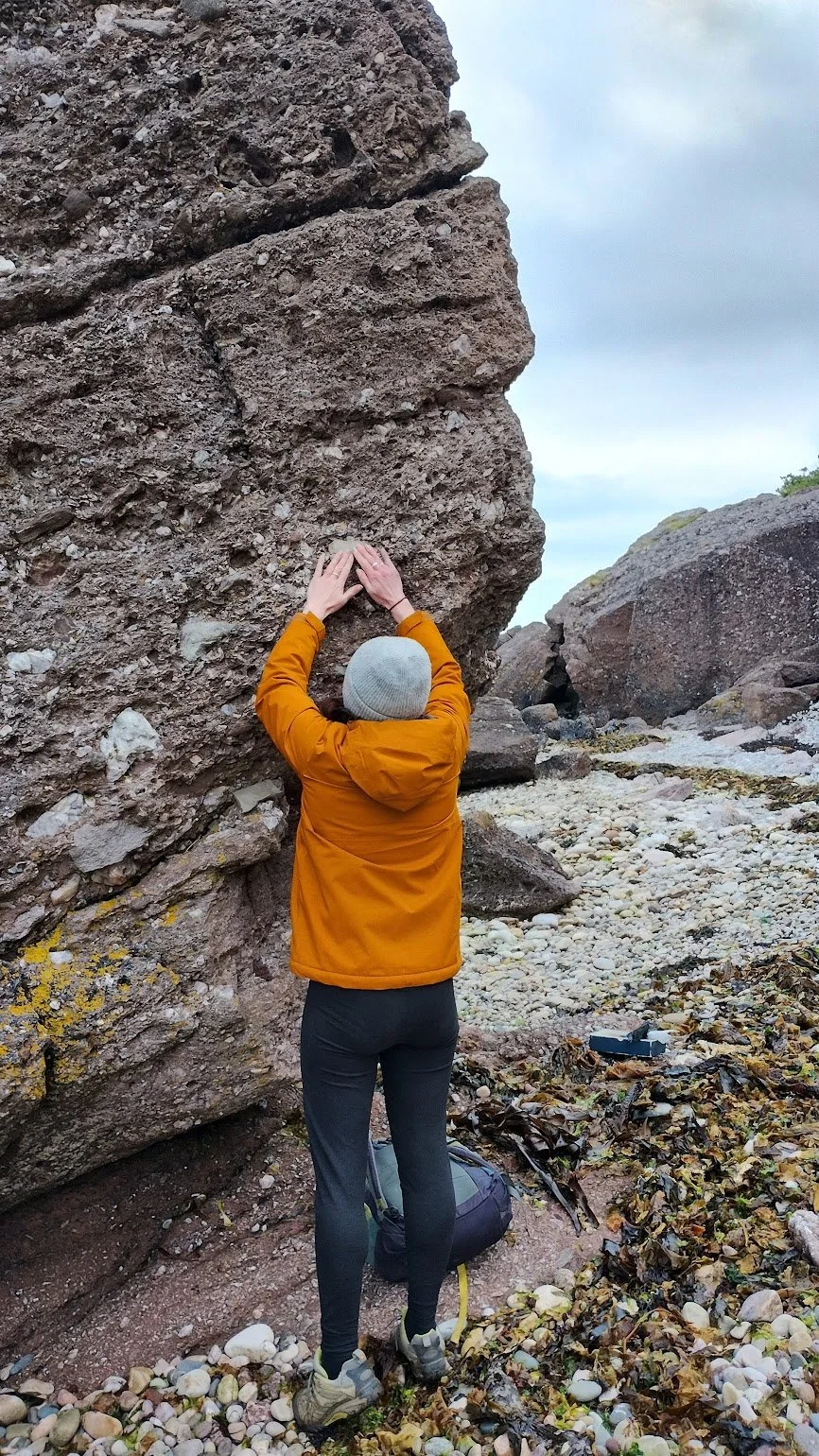
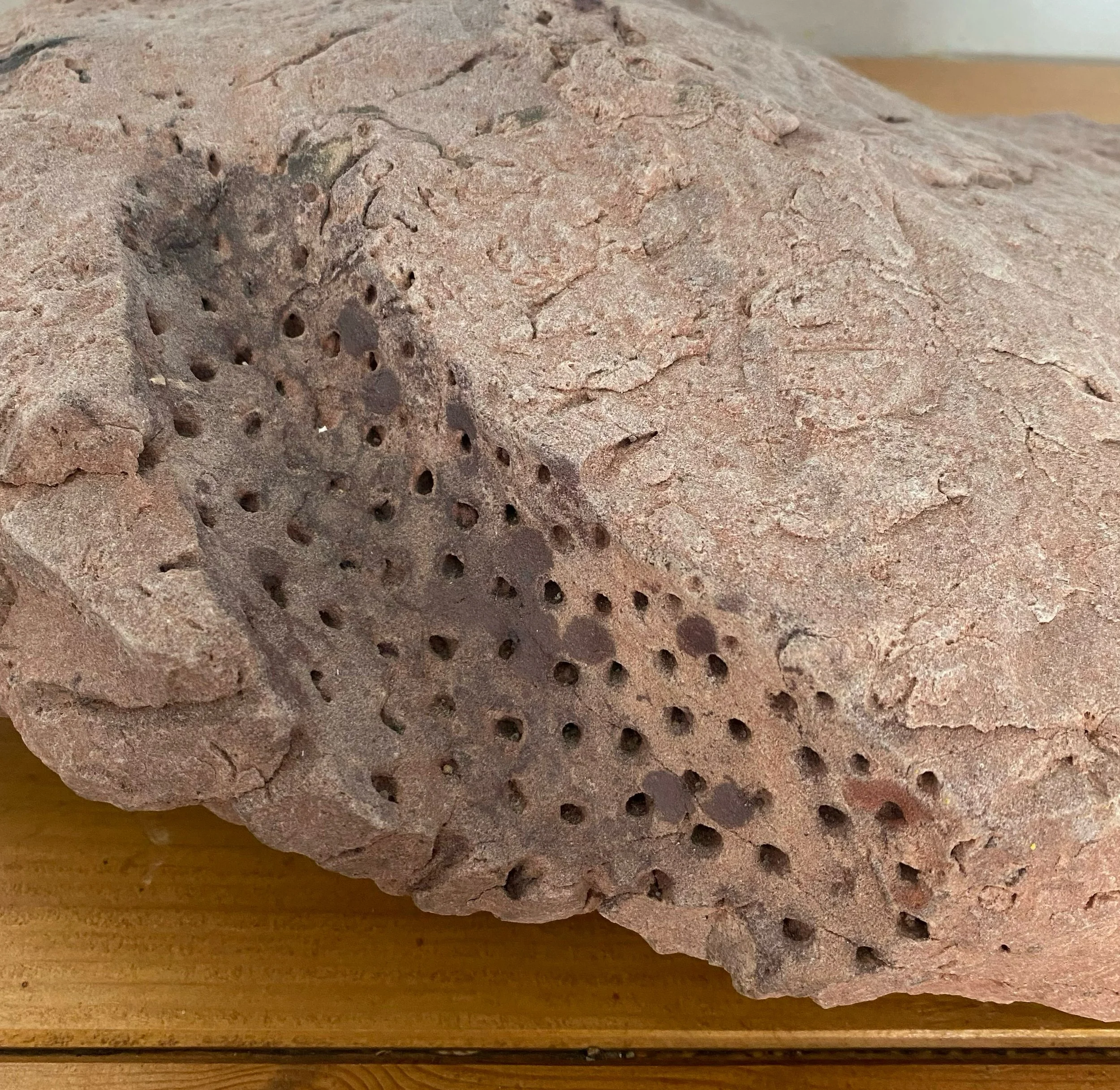
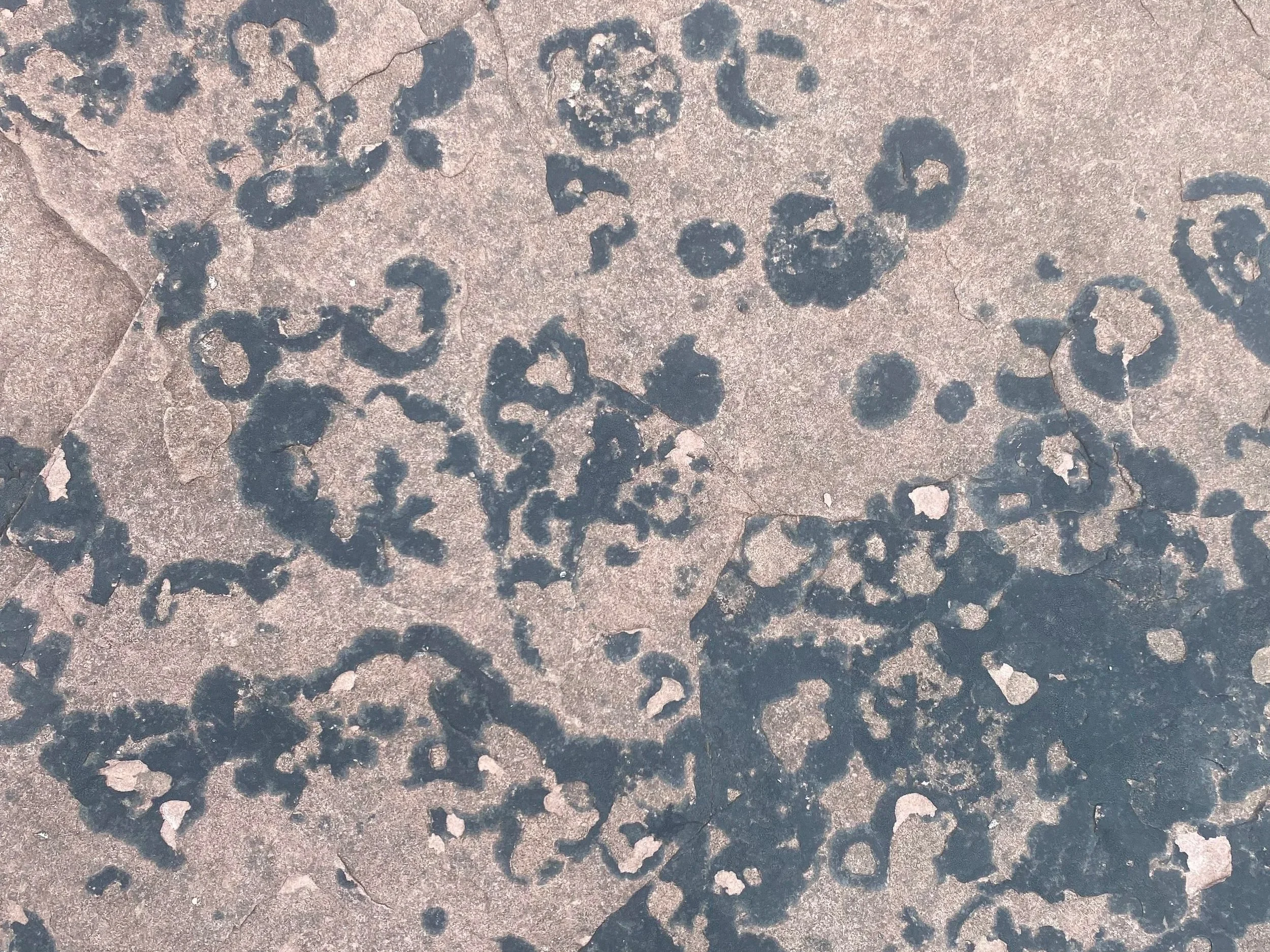
Day 0- Corrie With this being a micro residency, for 5 days, I arrived a day ahead to get settled in and to organise my working space. I took the ferry from Clanaig and drove from there to my base in Shiskine. On the way, I knew I’d be passing Corrie, where the old red sandstone can be found, in wild formations. So I took this opportunity to gather some research here.
I liked the strange black markings across parts of the sandstone (above left -which I later learnt is biological, as opposed to being part of the make up of the rock itself) It was the start of figuring out what to record and focus on, and to develop my fairly limited knowledge of geology.
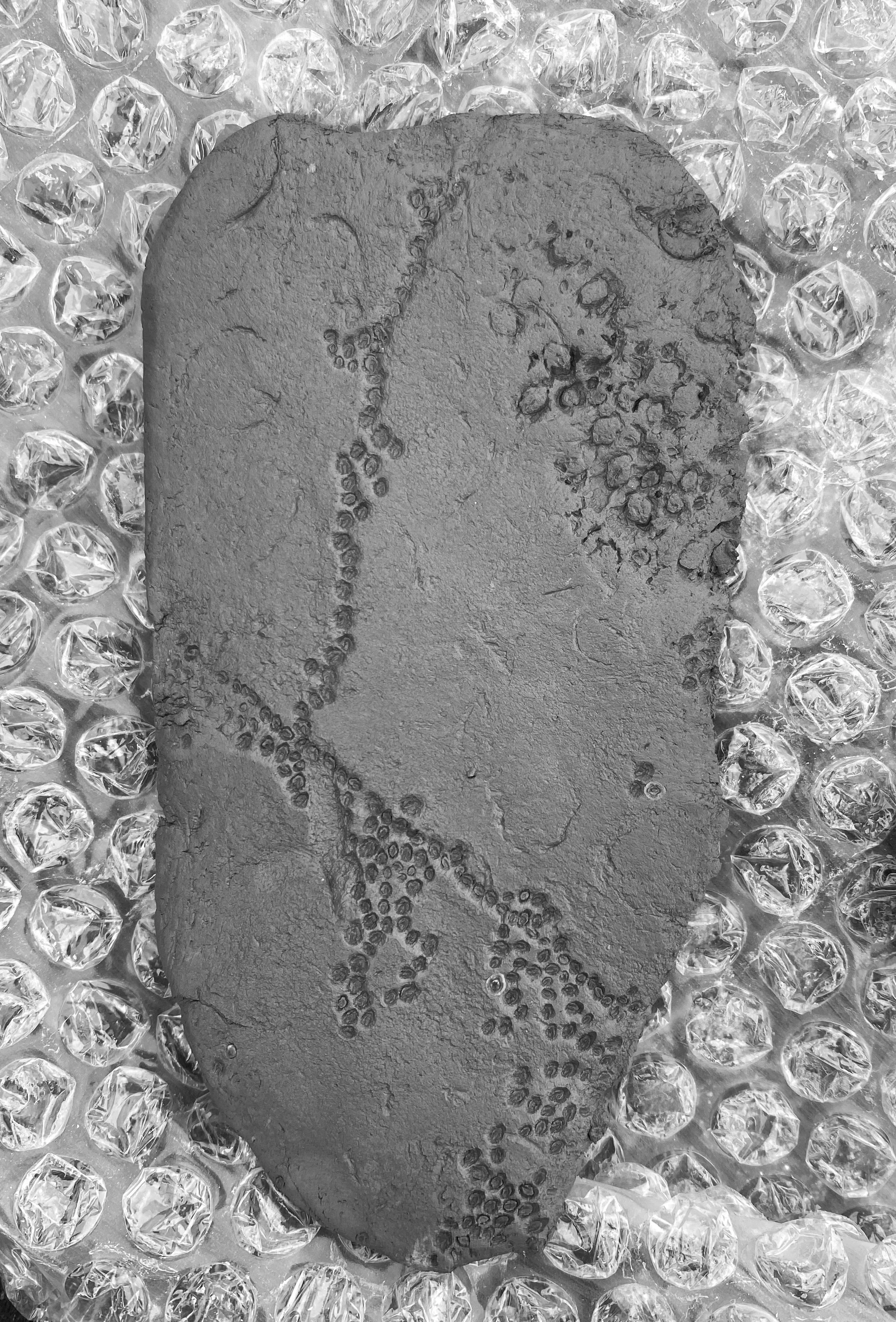
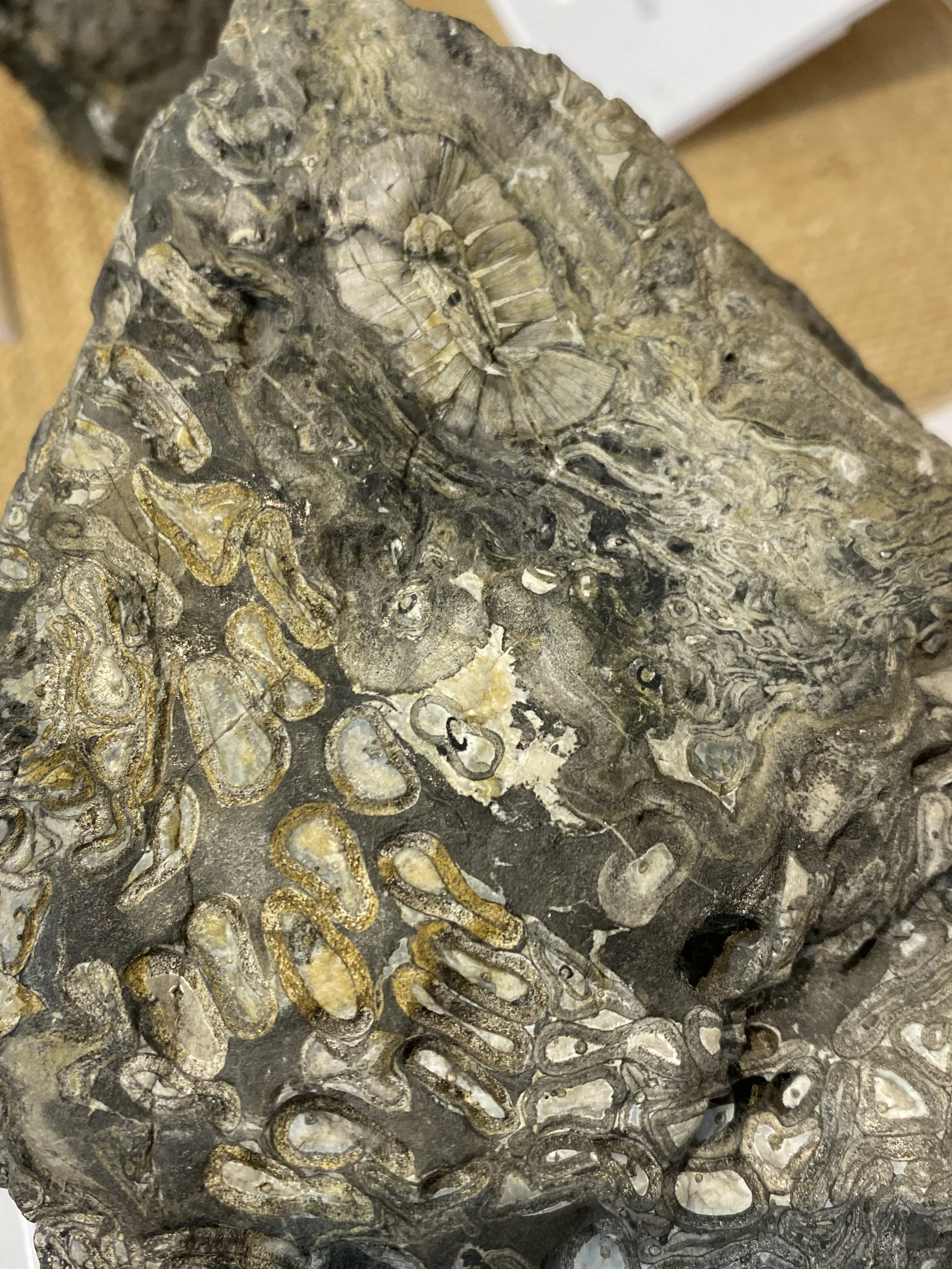
Day 1 - Arran Geopark Centre With guidance from local artist Rob Stevens, I visited the Arran Geopark Centre, where a wonderful selection of plant trace fossils and rock samples can be found and handled! which is always exciting for me. The plant trace fossils, the granite intrusion, the folded schist, porphyry.. there were so many rock types that were new to me and really satifying to study up close.
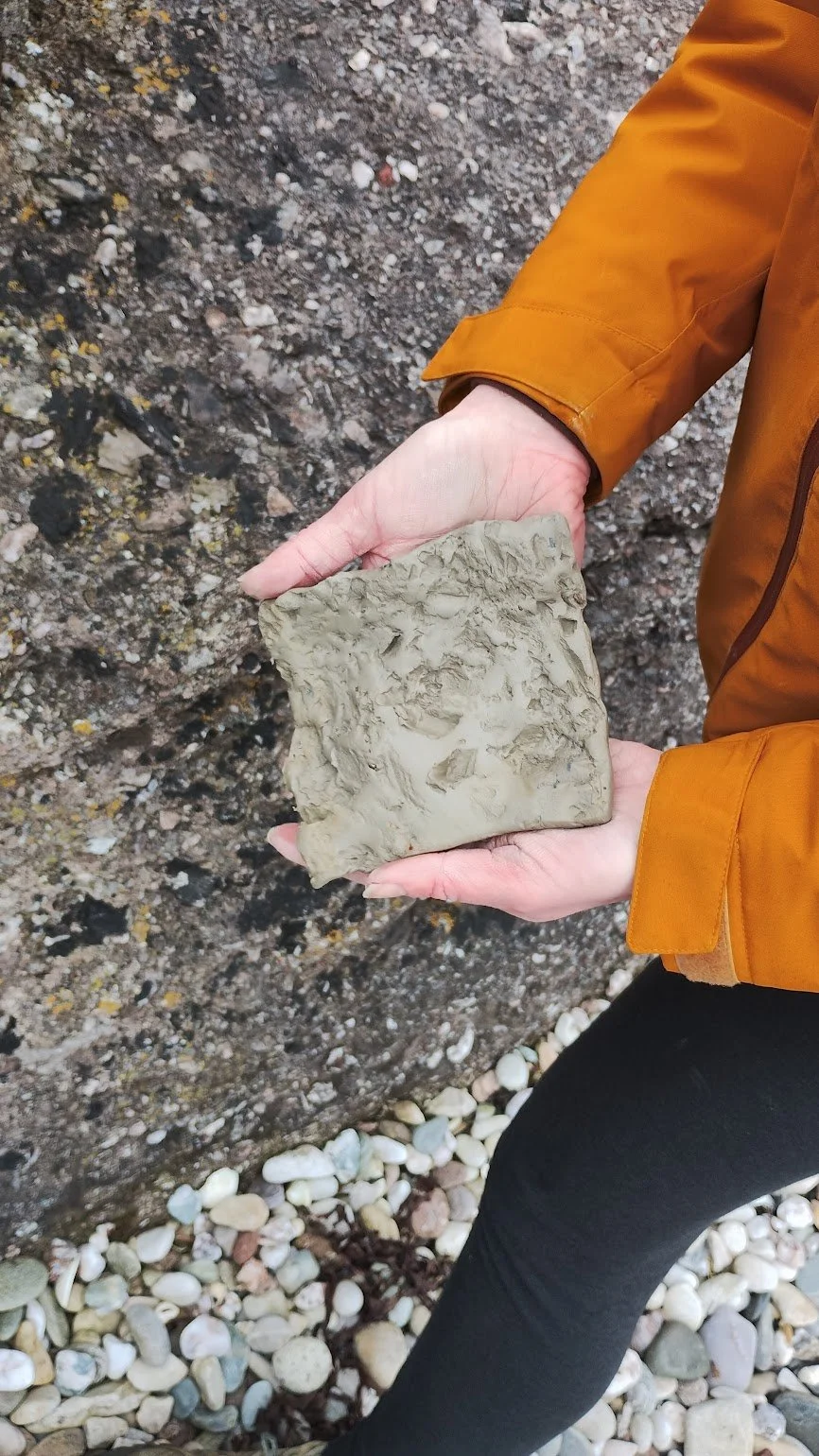
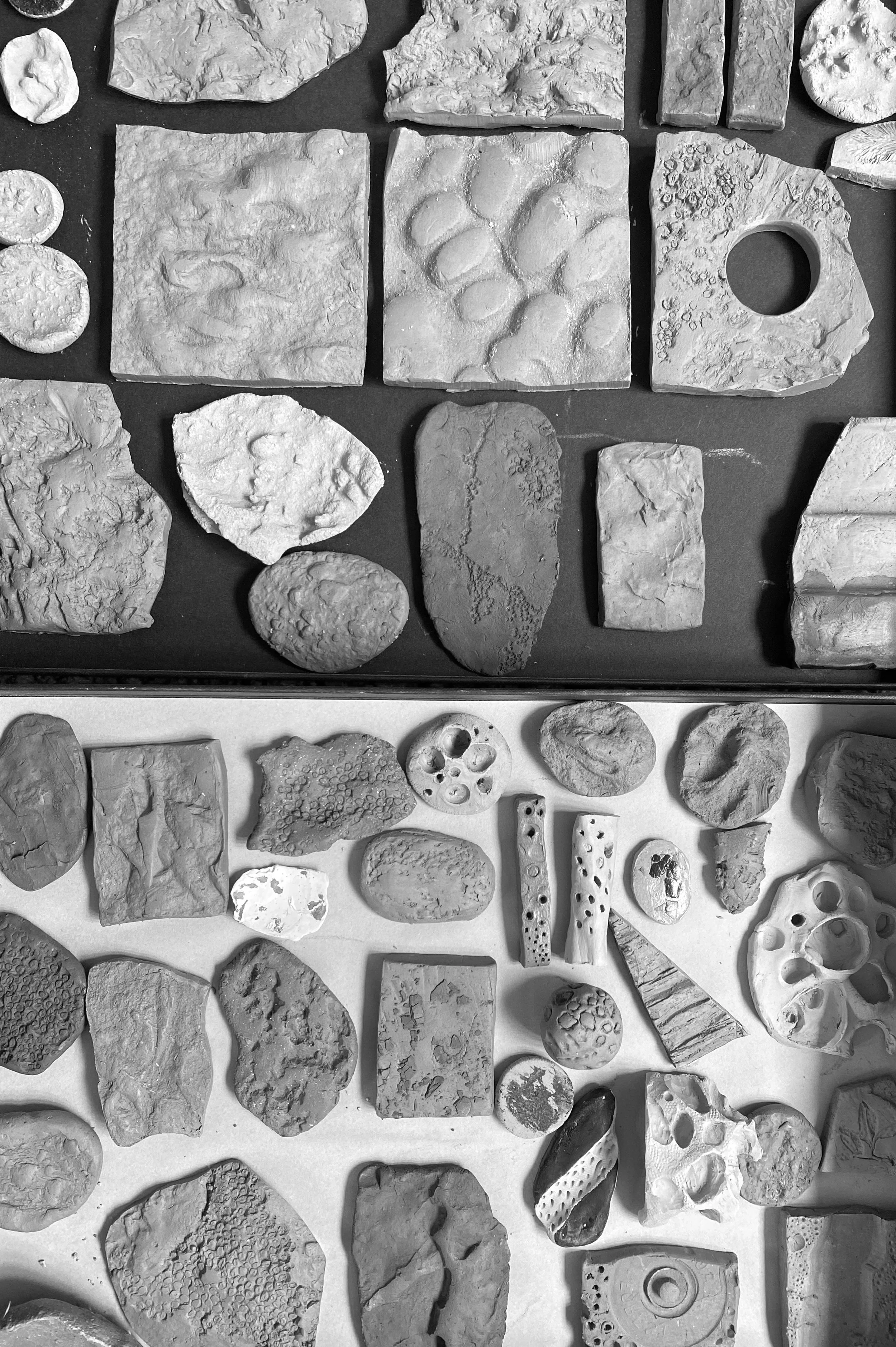
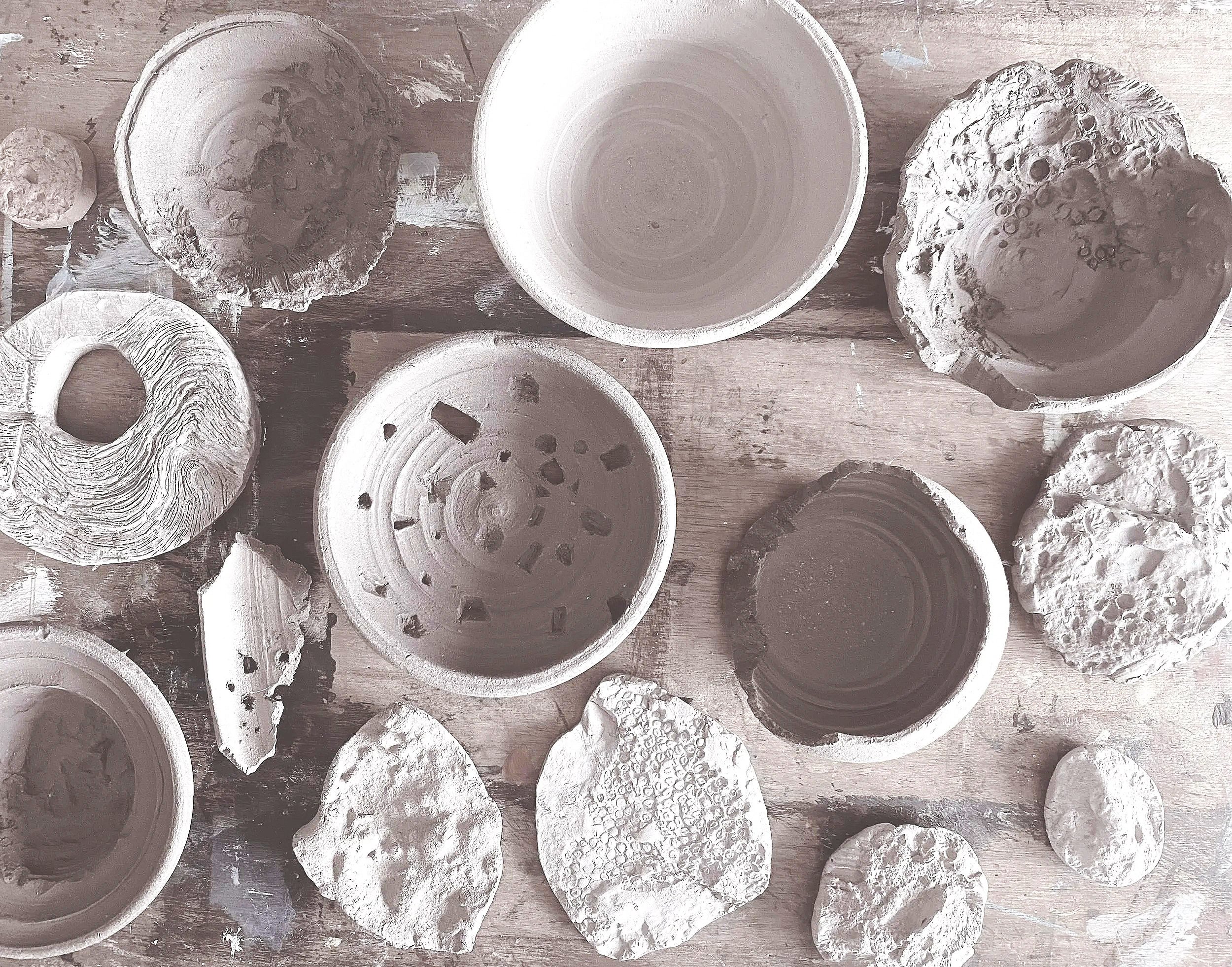
After recording this material, I headed back to my base to sort though images, draw and start to experiment with clay as a form of documentation. This became a daily activity following each site visit on the island.
Day 2 - Kings Cave South west, close to my base at Shiskine, I took the Kings Cave walk and got to see some incredible carved images in the cave walls, spanning centuries. There is a trace fossil in this area also, an ancient reptile print, but I didn’t manage to find it!
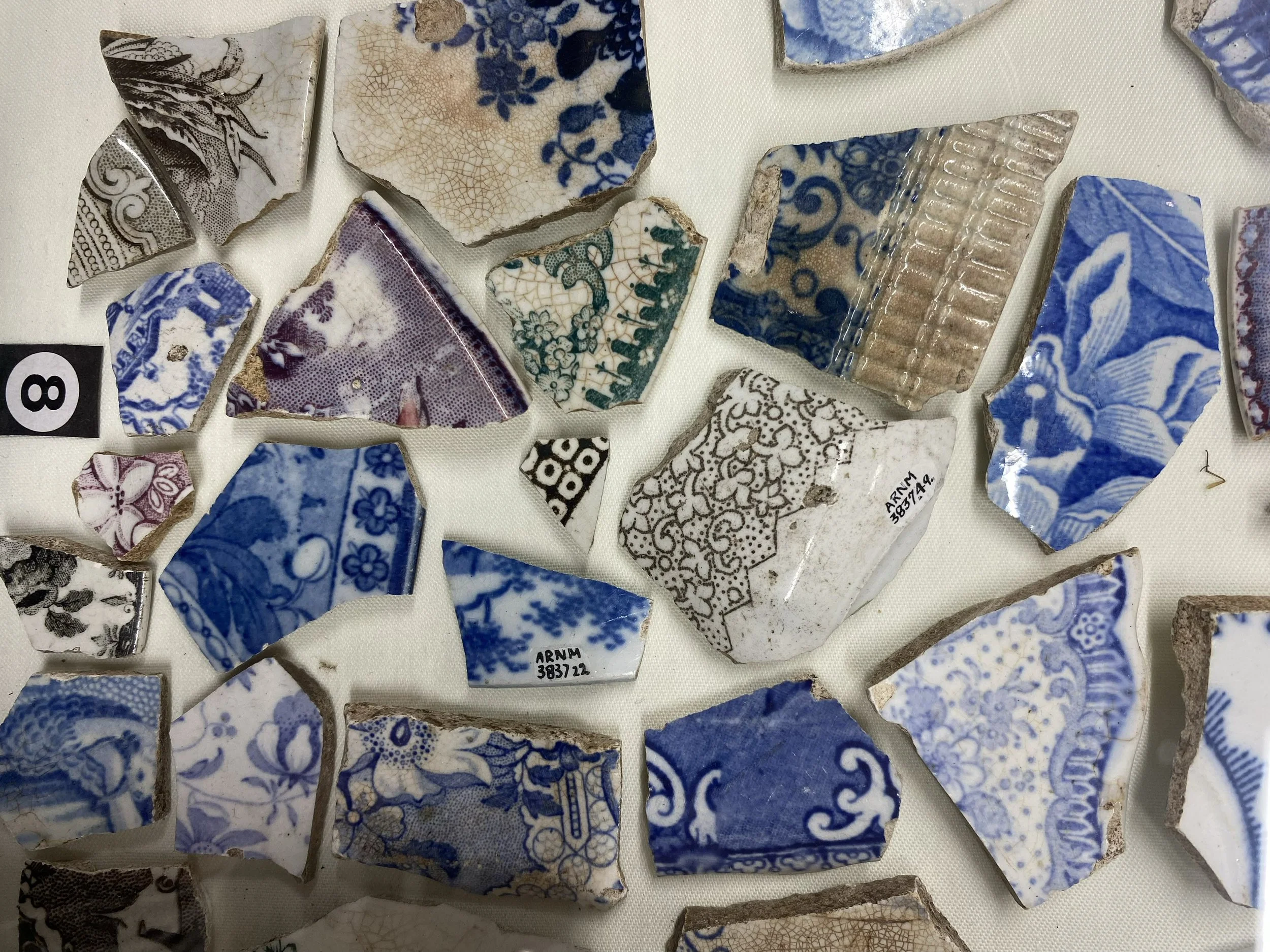
Foraging about on the shore I collected rock samples and fragments of man-made objects also, the trace of pattern, paint, shape and glaze, suggesting past function. I am fan of Marc Dion the visual artist, and enjoy collecting and cataloging, so I began sorting and arranging finds at this stage and considering visual relationships.
I took in the Drumadoon sill from a distance, as I was running out of time later in the day, but it is an extraordinary feature.. It was formed from magma squeezing through layers of sedimentary rock, cooling and undergoing immense pressure to form igneous rock. Visualising the original magma as it would have been, at that scale!, it feels otherworldly.
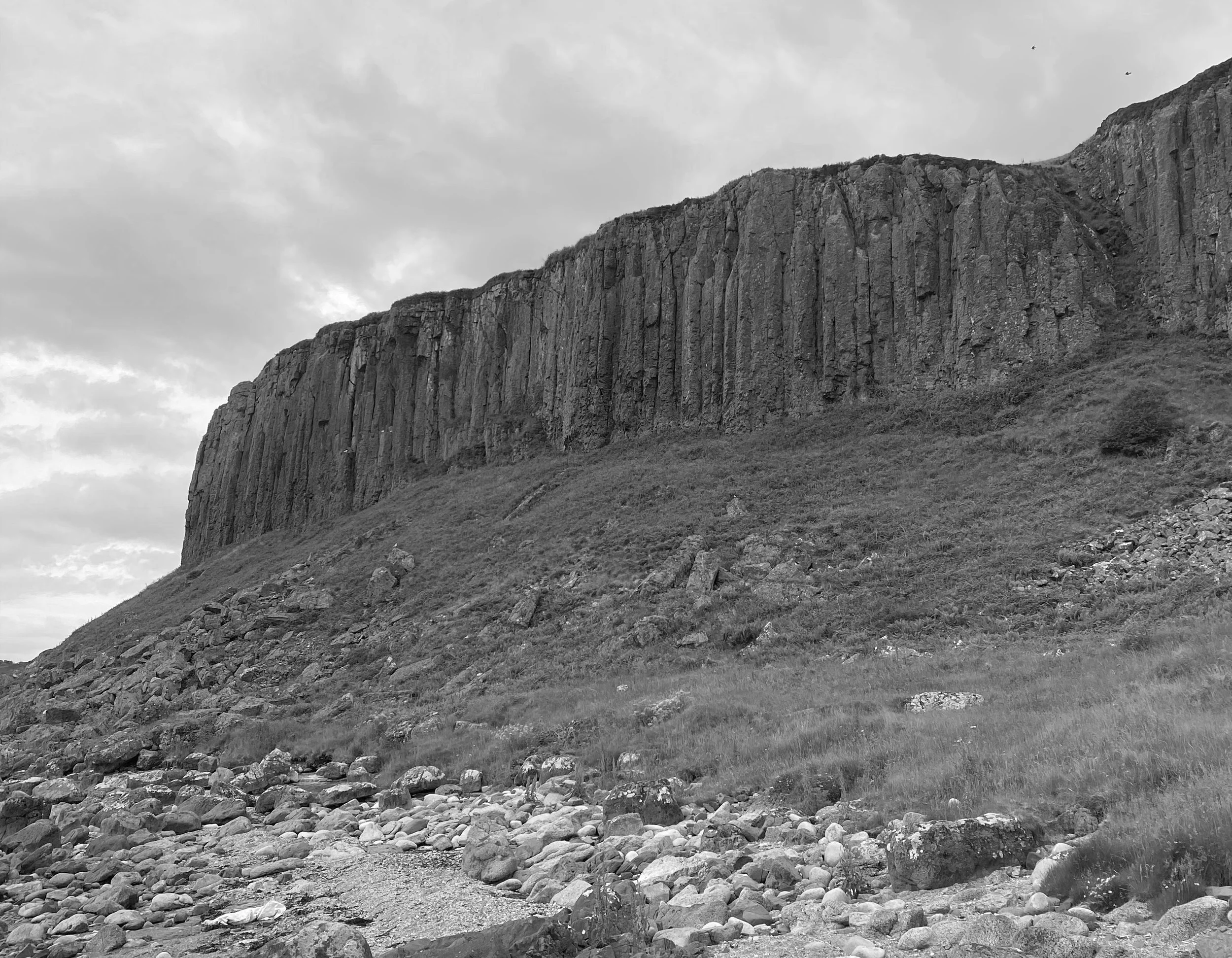
The Drumadoon sill viewed from Blackwaterfoot
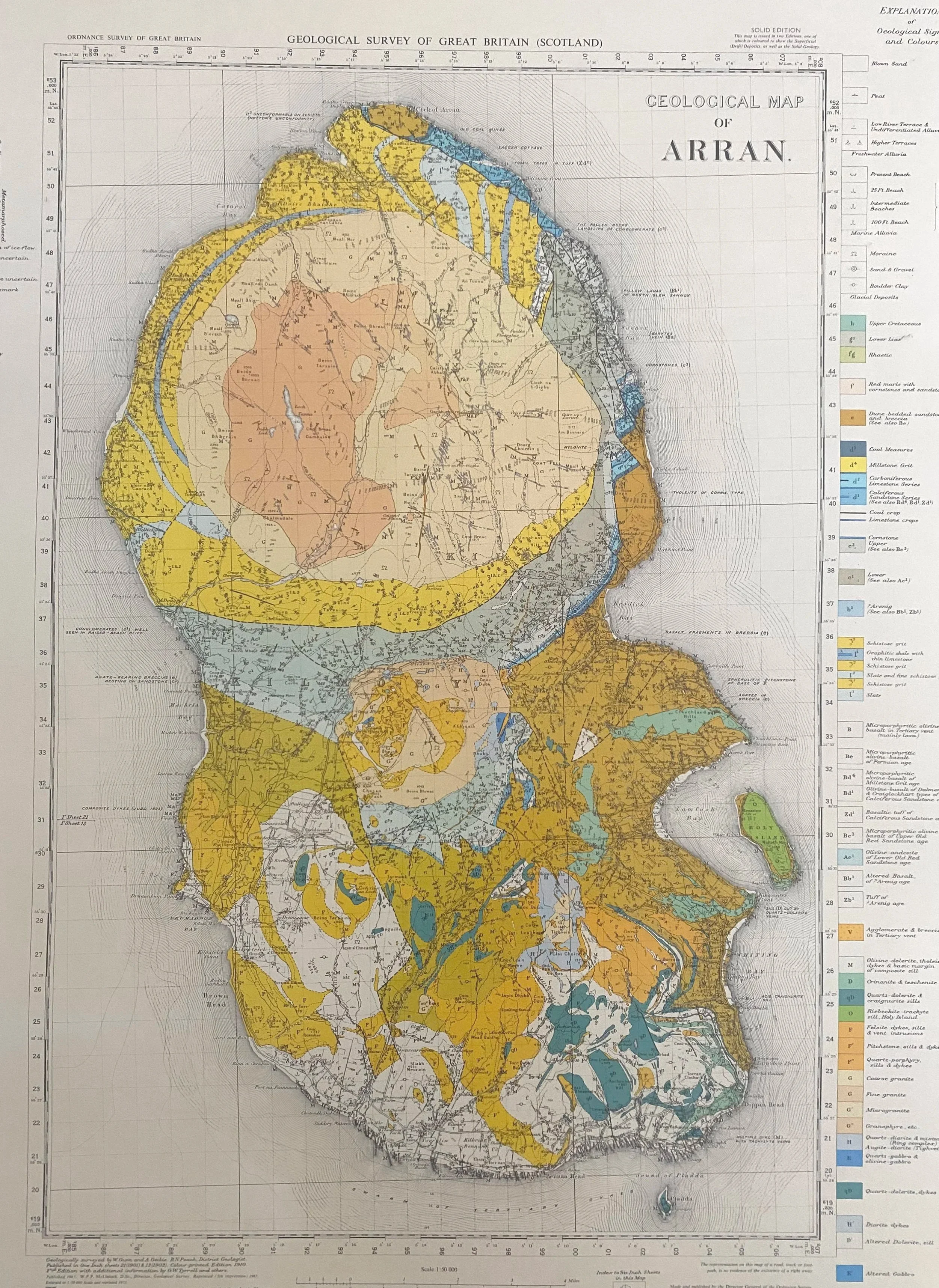
Day 3 - North Arran Circuit
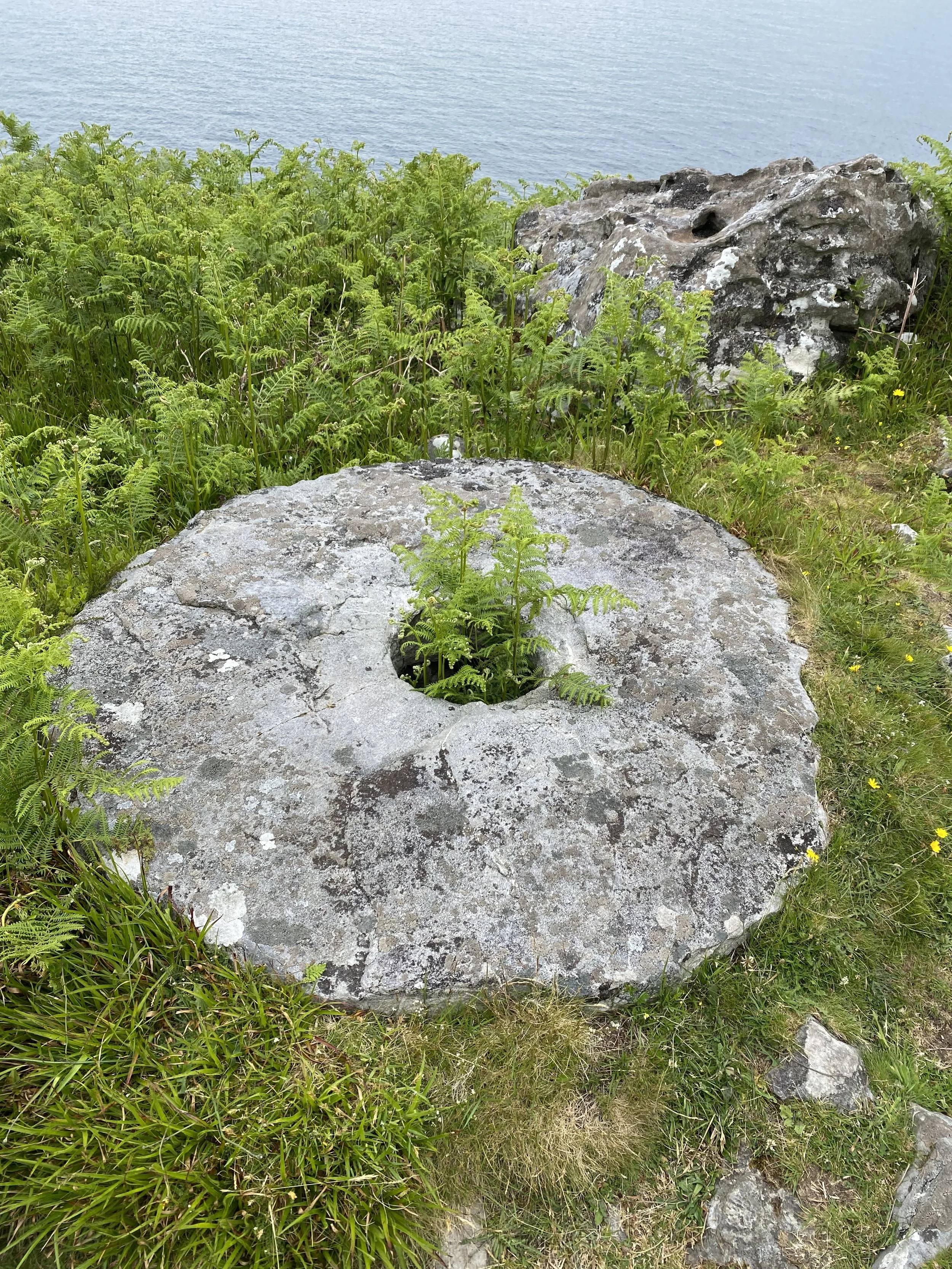
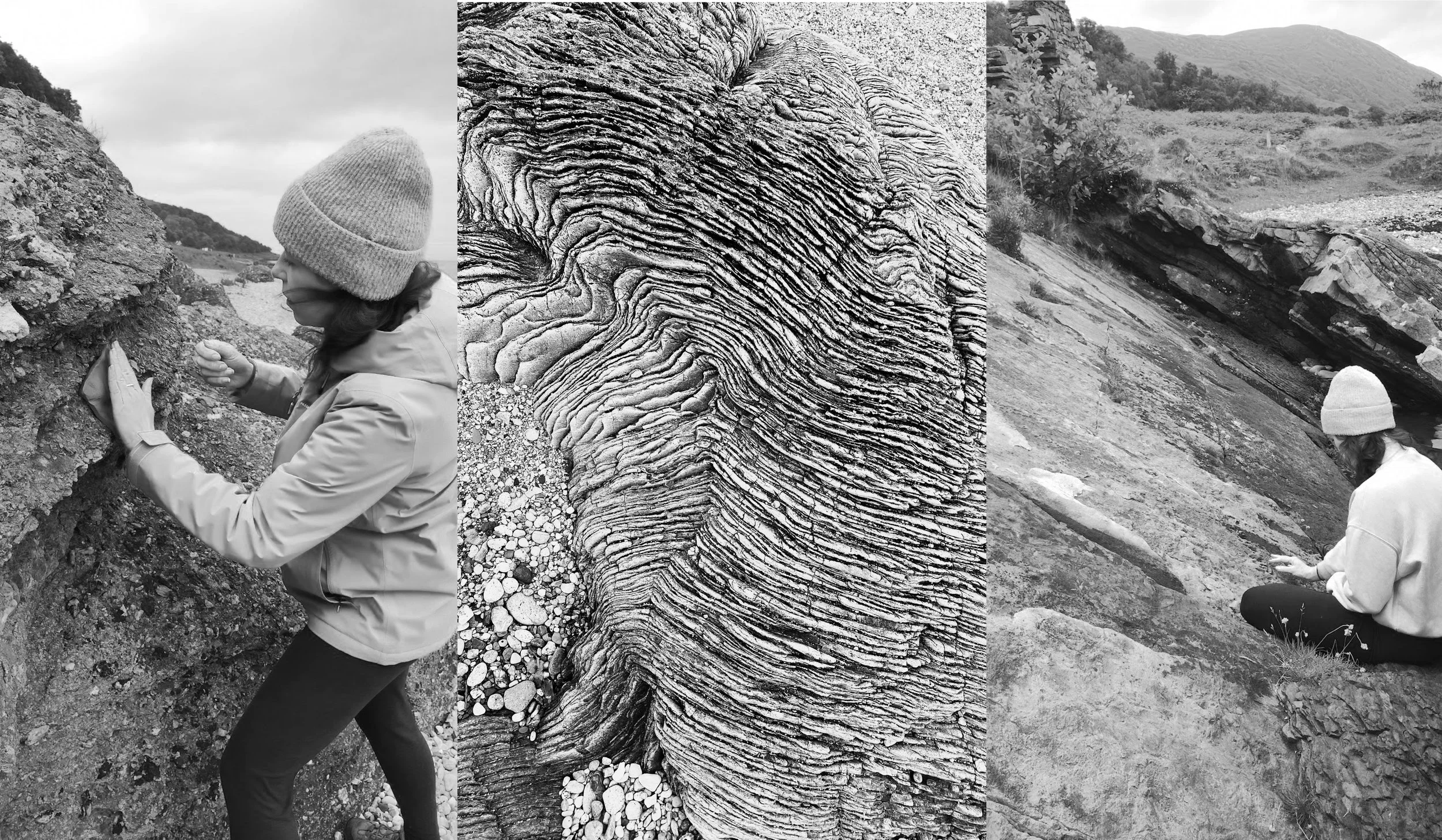
I had an amazing day taking the north Arran Circuit with the Geopark manager Malcolm Wilkinson. By having a guide I could not only get straight to very specific points of interest, I could also take in so much more information over the day. James Hutton’s ‘Unconformity’ (I’ll delve into this at a later date) Traces of Arrans past industries, pony tracks, a millstone dissappearing back into the landscape, abandoned buildings, giant trace fossils, unusal plants like navelwort, ancient cave carvings, conglomerate rock and strange deep cuts into sandstone which we couldn’t identify. Lots of curious finds to fill and fuel the imagination.
Malcolm told me of 3 tree species which are only found on Arran, so I hope to return again to find these and document them first hand. With our stops and time to document various things, it took the full day to complete the walk and was a very satifying, immersive experience.
Day 4 - Arran Heritage muesum
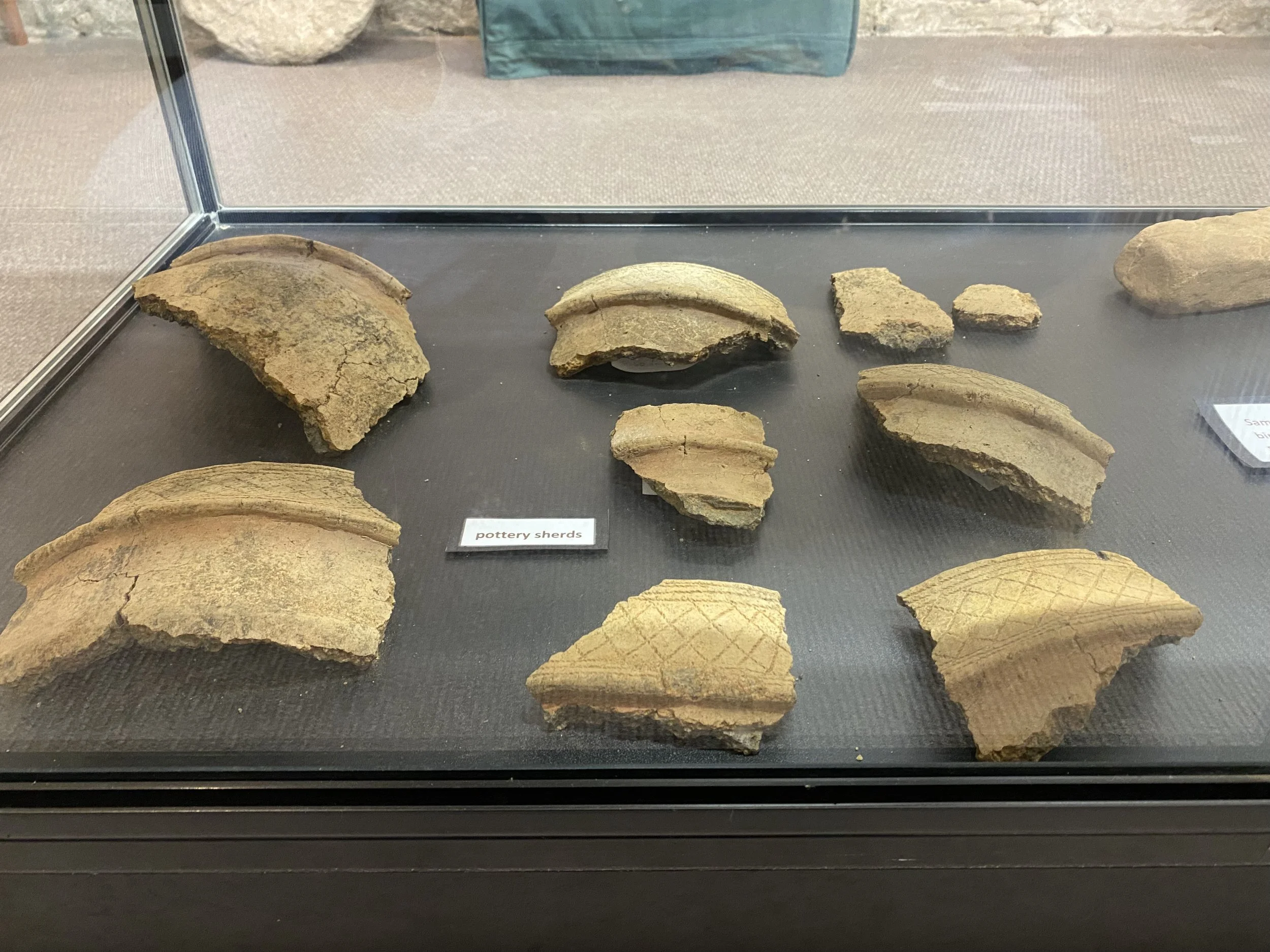
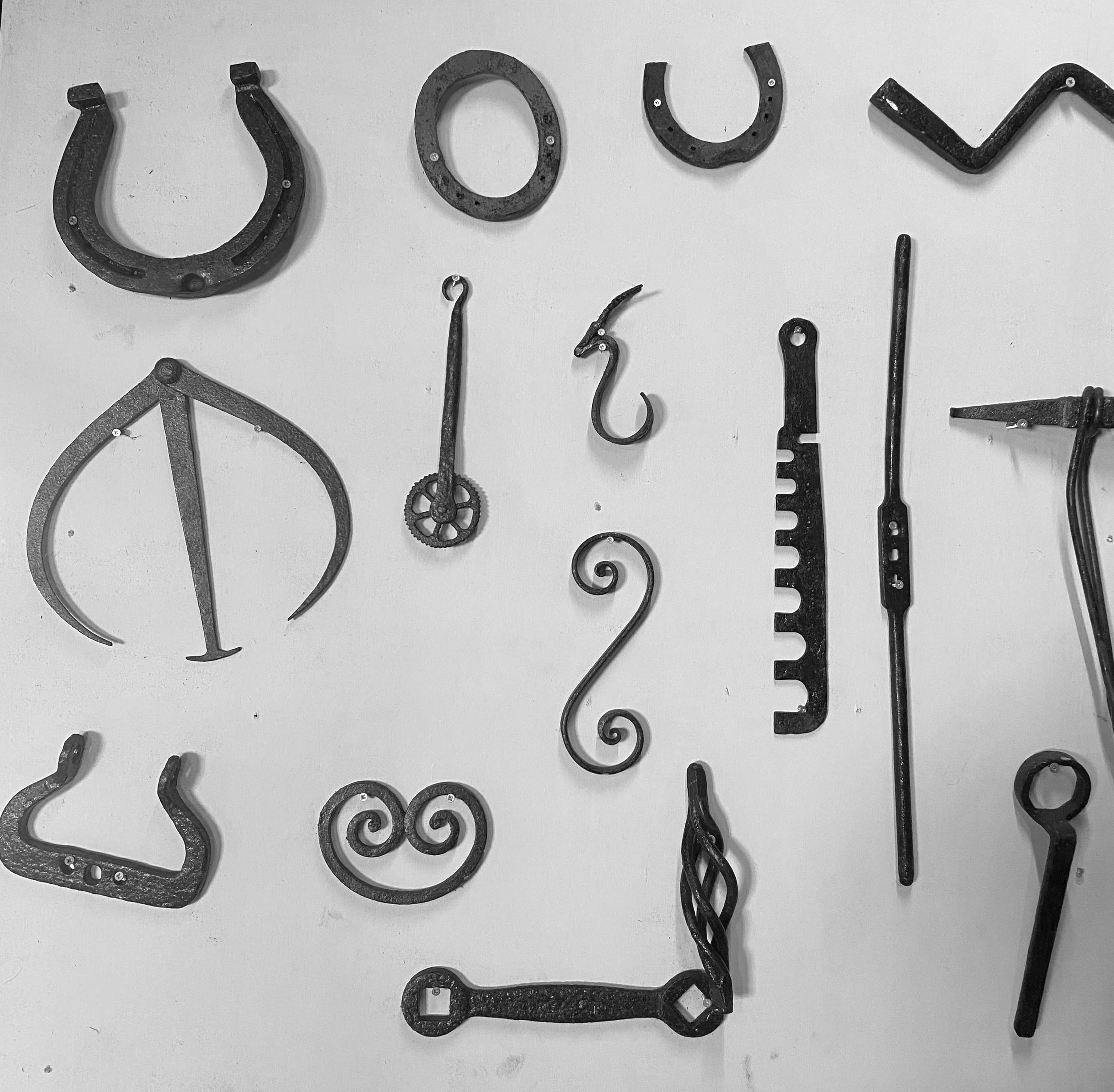
The tools, iron mongery and practical objects from Arrans ancient and recent past, were immediately interesting. I liked not knowing what many of the objects actually were or how they functioned. There was a room dedicated to Arrans geology and so I recorded a great many more rock and mineral samples also. The museum is a partner of the geopark and is managed and run by local volunteers. It has very much grown from the site itself; a collection of beautiful buildings, formally a croft and a smiddy.
When processing some of this research, I began recording the interest I had in the functional fragements from the museum. I began making small objects from clay with ridges, sides, handles, loops... building in traces of function and ornamentation, alongside the natural textures, marks and patterns from the geological samples.
I was in danger of developing ideas too much as this stage!, so tried to pull back a little and bring my focus back to observing and absorbing information.
Day 5 - Kildonan & Gobhlach Art Studio -
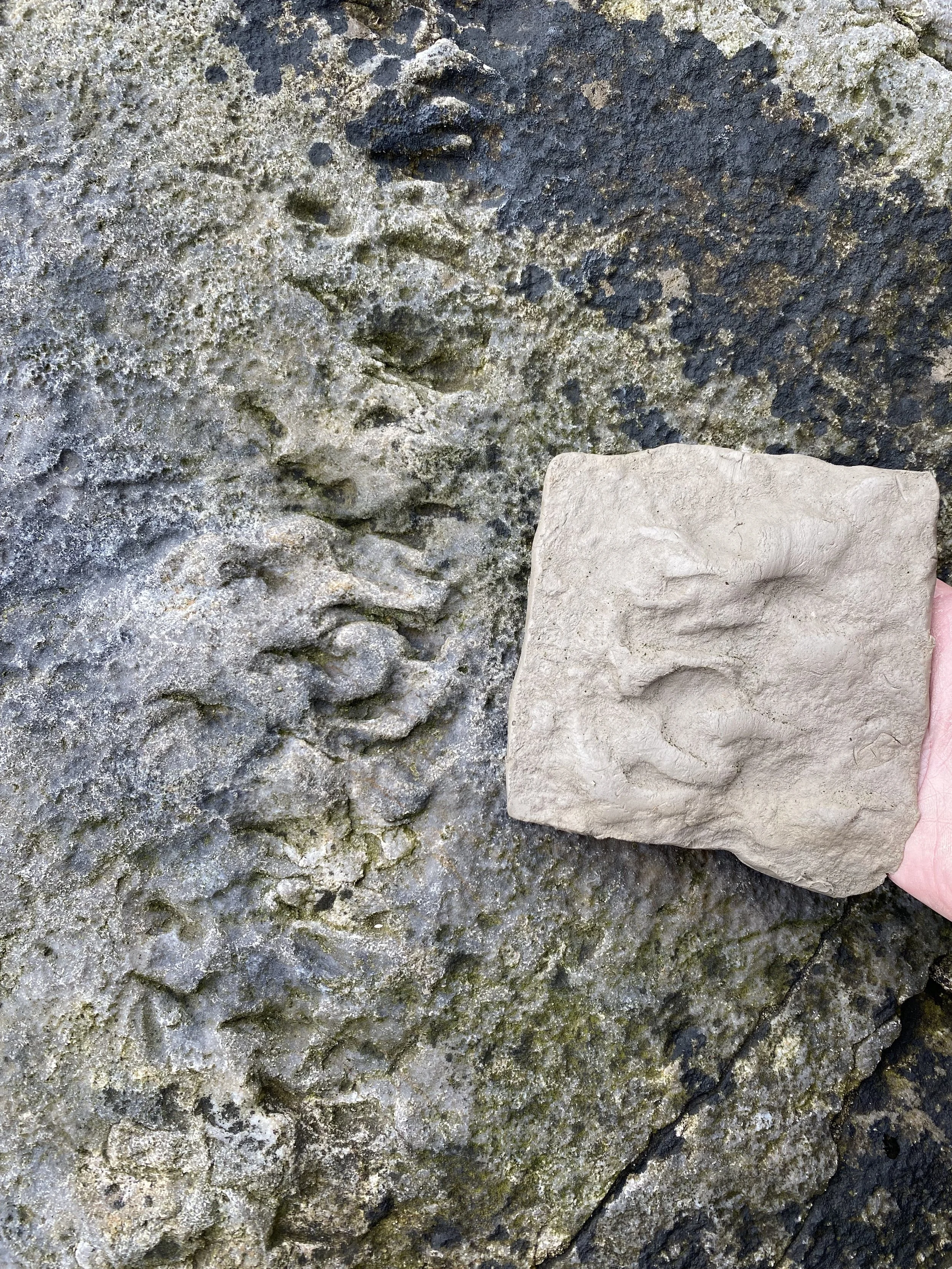
I had tried and failed to find the ancient reptile prints when taking the kings cave walk, so I was very happy to eventually locate the fossilised footprint at Kildonan, 240 million years old! from a giant reptile ‘Pseudosuchus’ that once walked on Arran.
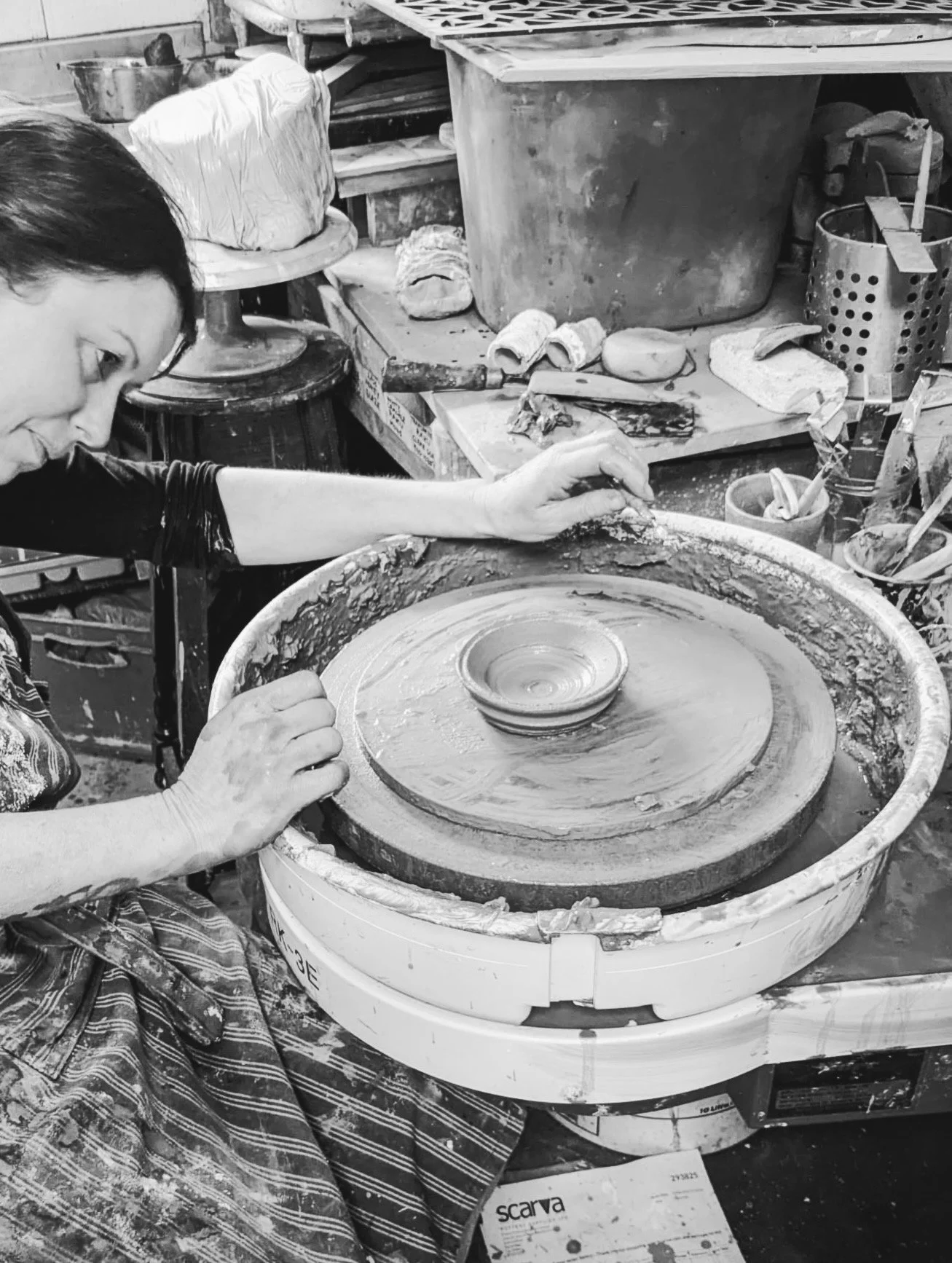
I spent the afternoon with Arran based Artist Rob Stevens at Gobhlach Studio, who has been supporting this residency also. Rob taught me various processes for working with clay and that afternoon, showed me how to turn a pot or two on the wheel. In such a short space of time, Rob shared so many skills and tips which will be so valuable in developing my skills in this field.
The timing of my curiousity in working with clay and this residency, set within a geopark, were uncanny. The isle of Arran evokes uncanny feelings beyond the physical, leaning into the untangible, it provided a wonderful atmosphere for me to explore within and one I very much hope to return to.
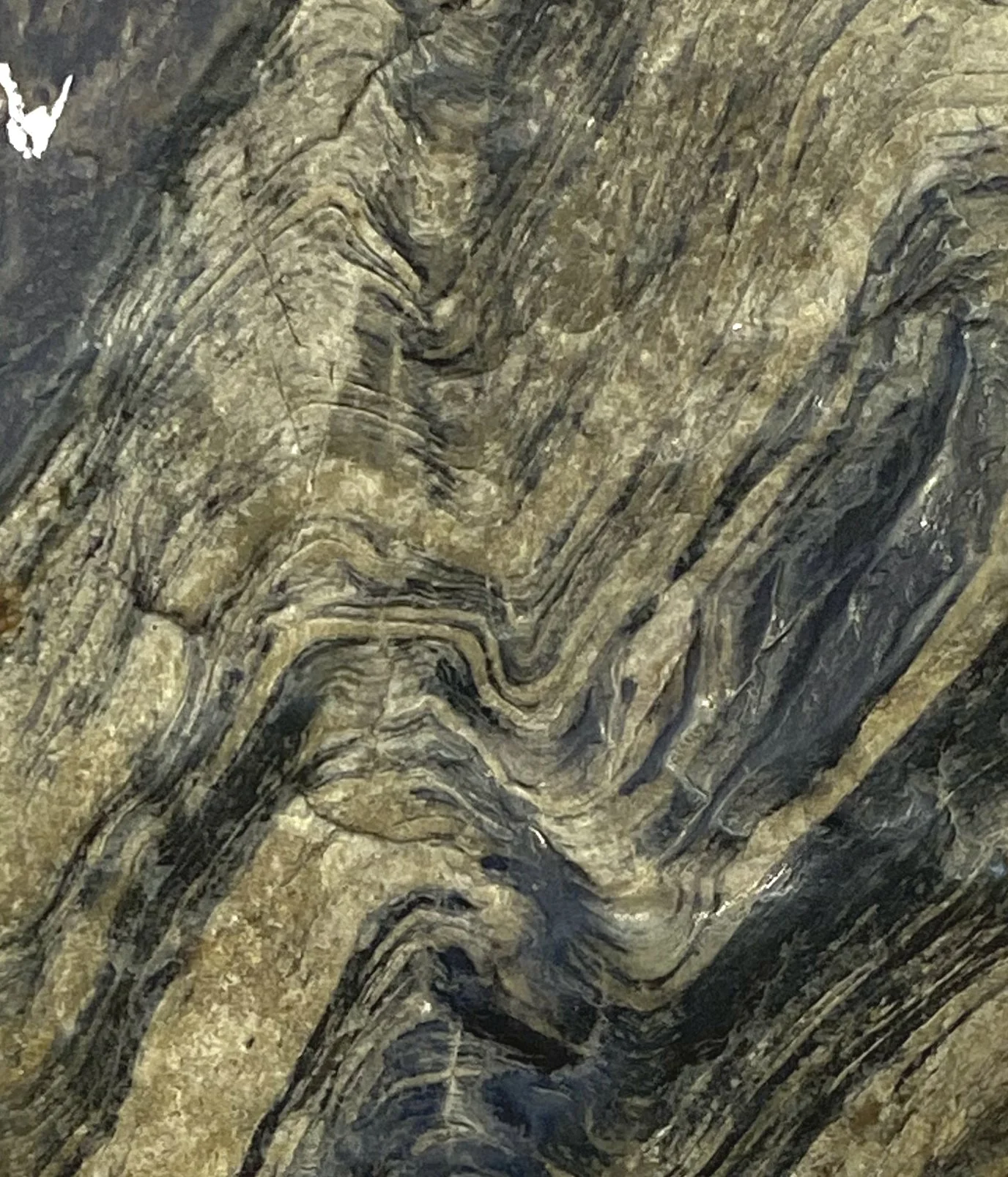
Deformed Schist (above) Pottery sherds in Arran Heritage Museum (right)